Understanding the Whole Human. Multiple Human Bodies.
- Victoriya Litargne
- 5 days ago
- 3 min read

At Vital Life Nursing, we support clients and families not just through medical coordination and advocacy, but by helping them see the deep, interconnected relationship between the physical body and mental health. To truly promote wellness and resilience, care must extend beyond treating symptoms — it must embrace the human being as a complex, multidimensional system.
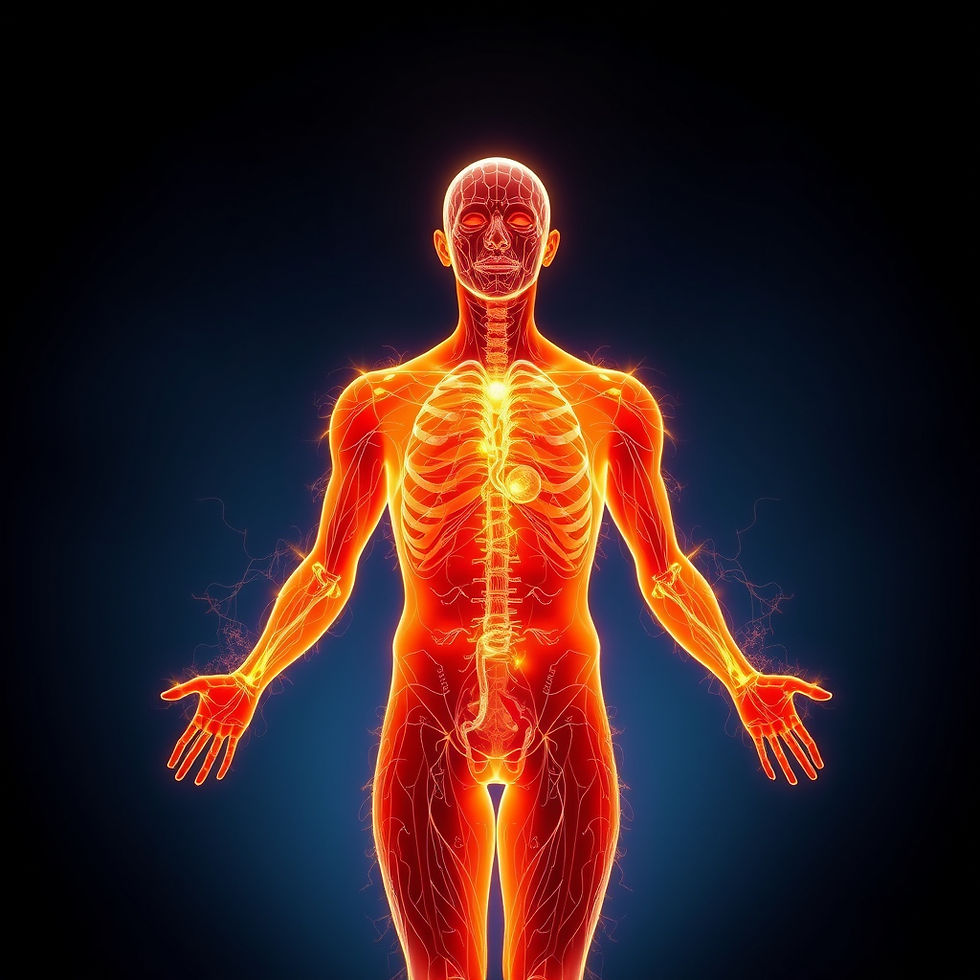
Understanding the Whole Human: Why Holistic Nursing Matters for Body and Mind
A fascinating perspective from holistic research suggests that human functioning can’t be reduced solely to the physical body. Instead, layers of experience — including psychological, emotional, energetic, and spiritual dimensions — play important roles in health, behavior, and how illness develops and resolves.WJRR
The Multidimensional Human System
Traditional Western medicine often views health through a linear, cause-and-effect lens — for example, symptom A leads to diagnosis B, which leads to treatment C. However, ancient wisdom and holistic approaches propose that humans are comprised of multiple dimensions, each influencing the others. These include physical structure, emotional states, mental patterns, and deeper layers of self-awareness and meaning.WJRR
In simplified terms:
The physical body handles biological needs and survival.
The mental and emotional layers influence thought patterns, mood, stress responses, and behavior.
The energetic and intuitive aspects contribute to how we understand ourselves, make decisions, and respond to life’s challenges.WJRR
When these dimensions fall out of alignment — such as when stress, trauma, or chronic illness burden the emotional or mental body — physical symptoms often follow. This mirrors what we see in clinical practice: individuals dealing with chronic physical health issues frequently experience anxiety, mood changes, or cognitive challenges. Understanding these connections can help nurses and caregivers provide compassionate, whole-person care.
Why This Matters in Nursing Practice
Holistic nursing recognizes that:
Mental health and physical health are inseparable. A person with ongoing pain, hormonal imbalance, or chronic disease may also experience anxiety, depression, or cognitive fatigue — and nurses are uniquely positioned to address both.
Thoughts, emotions, and physical reactions influence each other. Our beliefs, coping mechanisms, and emotional responses shape the experience of illness and recovery.
This idea aligns with nursing roles that focus on advocacy and education — not only explaining treatment options but empowering patients to understand their bodies and minds together.
Bringing Insight Into Practice
At Vital Life Nursing, we apply this insight in several ways:
Education about physiology and mental well-being: Helping clients recognize how stress, nervous system function, and emotions affect healing.
Advocacy in care planning: Ensuring that health teams consider cognitive, emotional, and physical needs together.
Support through transitions: Helping clients navigate complex systems when physical illness and emotional strain coincide.
This holistic stance enhances communication between patients and providers, supports personalized care planning, and reduces the risk that emotional distress will be overlooked.
Holistic Nursing — A Bridge Between Body and Mind
Ultimately, this multidimensional view encourages a deeper understanding of health. People are more than a set of symptoms; they are integrated systems whose emotional and physical experiences influence quality of life and recovery. Holistic nursing embraces this truth, advocating for care that sees the person first.
At Vital Life Nursing, our mission is to walk alongside you — teaching, advocating, and navigating — so that your journey toward health accounts for both body and mind.
Resources:
Multiple Human Bodies: Psychological understanding of Holistic Approach and Intuition An article from World Journal of Research and Review (WJRR) ISSN:2455-3956, Volume-8, Issue-5, May 2019



Comments